A FEMINIST PERSPECTIVE OF DOMESTIC SPACE
Typology: Research
Work: Book
Location: Brussels, Belgium
Date: 2018
A feminist perspective of domestic space traces the lines of feminist practices and architecture. It searches diverse methodologies of analysis in order to reveal a gender-biased architecture.
DISCOURSE ︎︎︎
Defining a feminist discourse in architecture is a complex and challenging task. Any attempt to approach such a definition quickly reveals the intricate relationship between architectural space and feminist practices. While articulating a precise notion of this discourse remains difficult, it is possible to understand architecture through the lens of feminist studies. This discourse does exist, and it is continuously evolving, constructing and deconstructing itself over time.
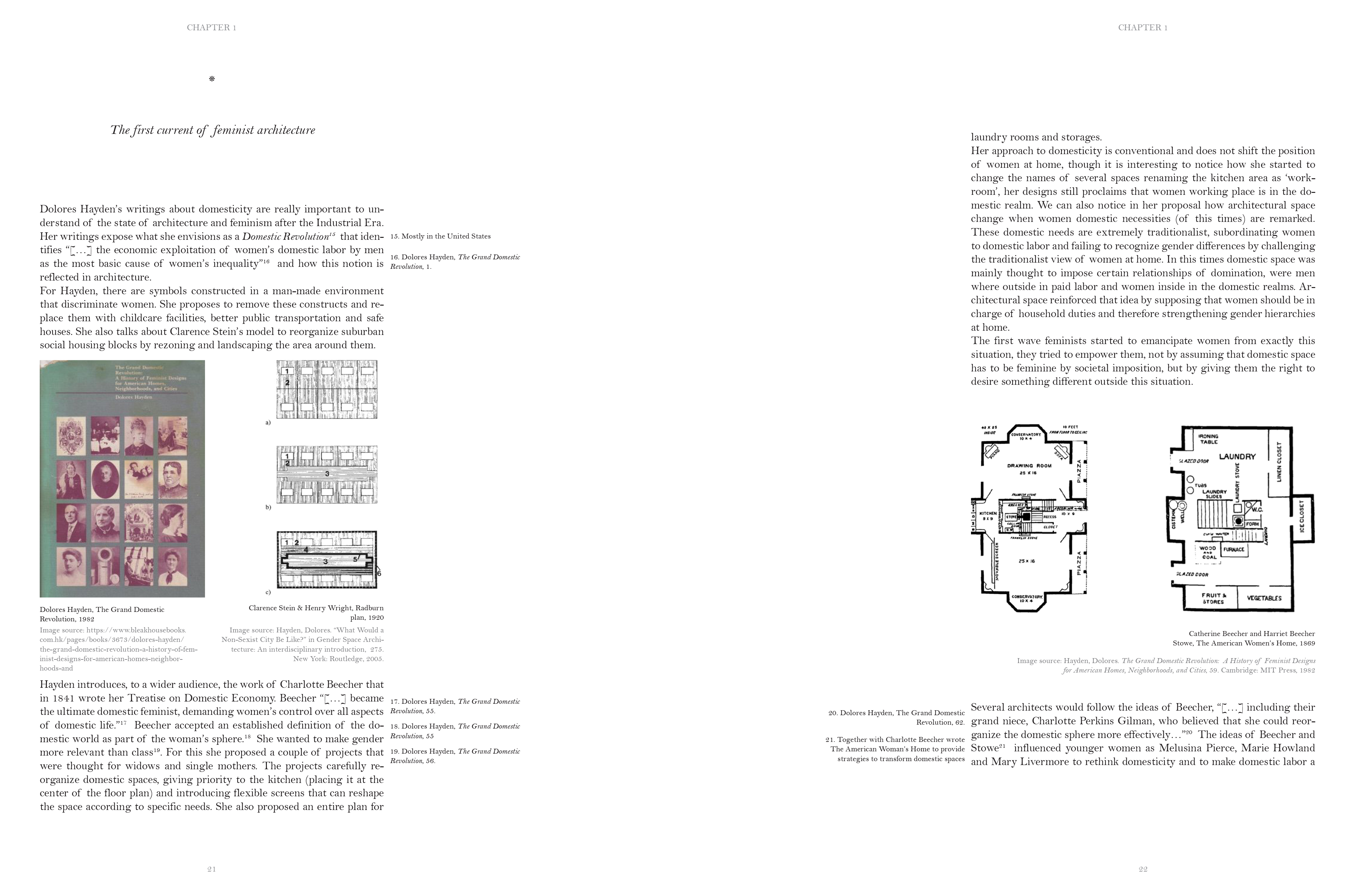
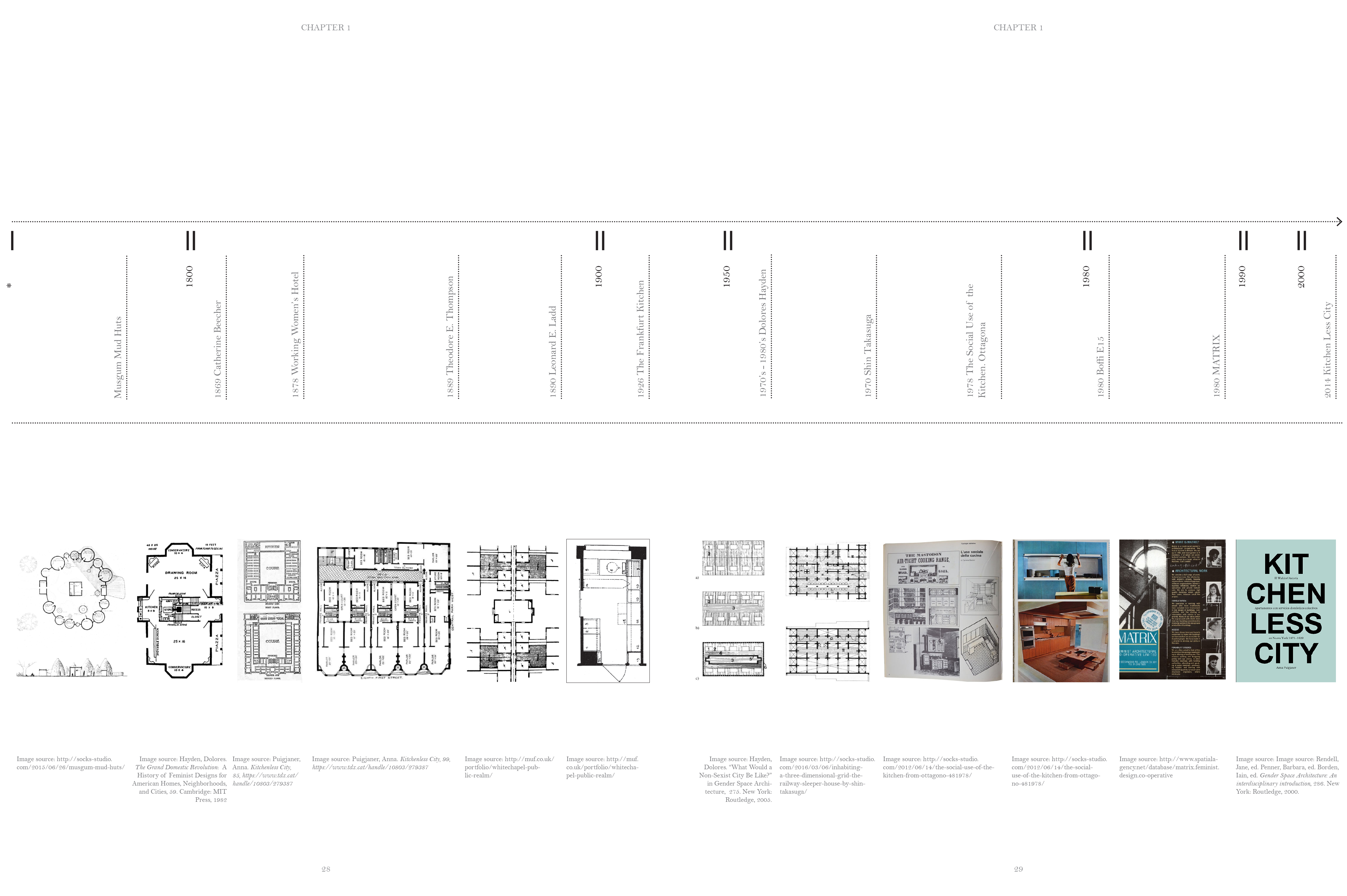
To frame these questions, it is essential to delve into the limited and often overlooked history of architecture and feminism, with particular attention to designs conceived for women. Although some research has examined this intersection, existing theories remain partial and fragmented. Exploring this relationship makes evident the role architecture has played in sustaining associations of power and domination. As a spatial container that creates, shapes, and maintains social relations, architecture reinforces gender differences, particularly through domesticity, where it has been instrumental in the construction of gender roles within the private sphere.
At the same time, architecture holds the potential to deconstruct gender dualities in the pursuit of more equitable platforms for action and full, fair participation. A feminist approach to architecture necessarily centers on the search for equality, stronger social bonds, and shared understandings, elements increasingly eroded by the ongoing crisis of social reproduction and long championed by feminist struggles for emancipation.
Such an approach also sharpens the understanding that feminist resistance has not been limited to demands for equality in labor markets or access to governmental support. Conceptually, it has involved a broader struggle against systems of power and inequality that manifest across social, spatial, and institutional structures. Ultimately, this perspective underscores the urgency of addressing contemporary inequalities in housing as conditions deeply entangled with economic, political, and cultural forces.
 A Feminist Perspective of Domestic Space
 Reflection Paper
A Feminist Perspective of Domestic Space
Reflection Paper